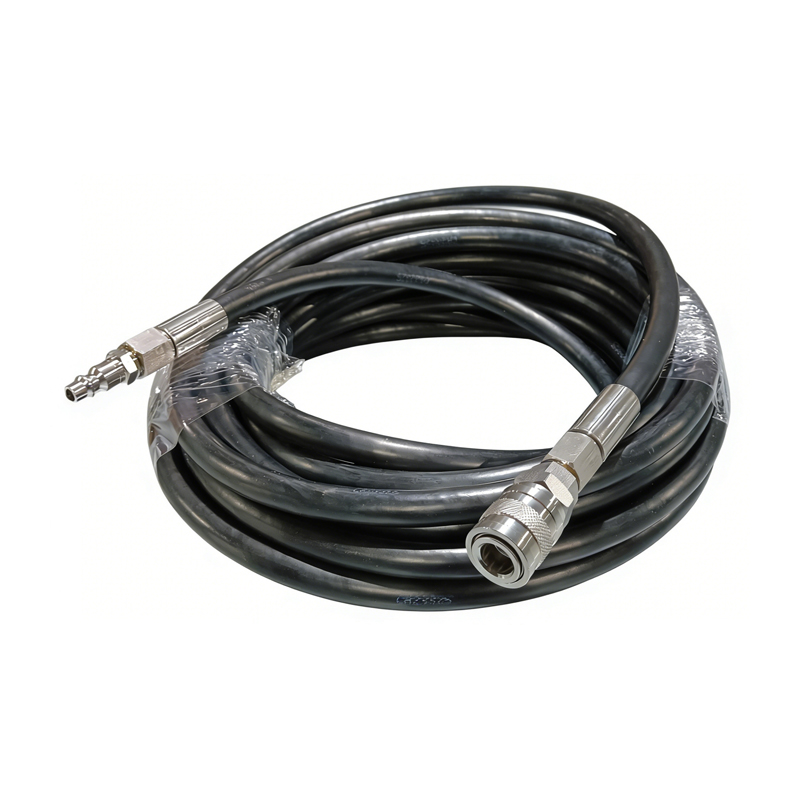
Views: 121 Author: Site Editor Publish Time: 2026-10-07 Origin: Site
Procuring breathing air equipment is a high-stakes, life-safety investment. Precision saves lives when workers enter hazardous atmospheres. Operators working in confined spaces, chemical plants, or heavy fabrication facilities depend entirely on their equipment. They rely on system integrity to survive atmospheres immediately dangerous to life or health (IDLH). Selecting the wrong hose or fitting severely compromises Grade-D breathable air delivery. It violates strict OSHA and NIOSH regulations. Furthermore, it exposes workers to immediate, severe respiratory hazards. A single mismatched component can lead to disastrous consequences on any industrial job site. System failures often result in severe toxic exposure or asphyxiation.
This guide provides a rigid, engineering-first framework for evaluating and shortlisting breathing air systems. You will learn how to ensure zero compatibility errors across your facility. We will explore the critical differences between standard and breathable air lines. Finally, we establish technical evaluation criteria and fitting compatibility rules. These protocols guarantee strict regulatory compliance and protect your most valuable assets.
Never mix-and-match without validation: NIOSH certifications are typically voided if a respirator is used with a hose or fitting not explicitly approved for that exact assembly.
Cross-connection prevention is mandatory: Breathing hose connectors must feature dedicated profiles to prevent accidental connection to standard plant air or deadly gases (like nitrogen).
Standard pneumatic hoses are unacceptable: Off-gassing toxic materials in standard industrial hoses makes them strictly prohibited for supplied air applications.
Validation before installation: Verifying pressure ratings, flow rates (CFM), and material compatibility against your specific worksite environment is non-negotiable.
Standard air hoses release toxic volatile organic compounds (VOCs). When compressed air flows through standard synthetic rubber, it strips chemical residues from the inner tube. These residues accumulate in the airstream. You cannot use these in breathing applications. In contrast, manufacturers build a compliant Supplied Air Respirator Hose Assembly using FDA-compliant materials. They rely on specialized PVC, EPDM, or Polyurethane. These specific formulations do not degrade. They never off-gas harmful fumes into the clean air stream. Workers breathe safe, uncontaminated air regardless of ambient temperatures.
Industrial managers must follow strict safety mandates. OSHA 29 CFR 1910.134 and NIOSH 42 CFR Part 84 strictly govern respirator use. You must use tested and certified assemblies. NIOSH evaluates the respirator, the supply lines, and the fittings as one complete system. Some facilities try replacing a damaged segment with off-the-shelf industrial tubing to save money. This action instantly voids all safety certifications. It also transfers massive legal liability directly onto the employer. If an incident occurs, the unauthorized modification serves as proof of negligence.
System components must support Grade-D breathable air delivery. The Compressed Gas Association (CGA) defines these parameters. Grade-D air requires an oxygen content between 19.5% and 23.5%. It mandates hydrocarbon limits below 5 milligrams per cubic meter. Carbon monoxide must remain below 10 parts per million. Odors must be completely absent. The delivery line must handle required flow rates without contaminating the filtered air passing through it. Using non-compliant tubing introduces moisture, particulates, or foul tastes, rendering the expensive filtration systems useless.
Continuous operating pressure of the line must match the breathing air manifold output. Compressors generate varying pressure levels based on the facility's demand. Many safety engineers use a 4:1 safety factor for burst pressure ratings. This ensures systemic integrity during unexpected pressure spikes. Pre-installation pressure checks are absolutely vital. They verify the entire setup can handle the compressor's maximum output without rupturing. A blown line during a confined space entry removes the operator's lifeline instantly.
Inner diameter (ID) determines friction loss. As air travels longer distances, pressure drops significantly due to internal wall friction. You must evaluate how length and ID impact the cubic feet per minute (CFM) reaching the respirator hood. Undersized hoses over long runs cause severe flow starvation. This happens particularly during peak inhalation periods when operators exert heavy physical effort. A properly sized Respirator Hose Assembly guarantees consistent volume. Most manufacturers provide specific charts detailing maximum allowable lengths for a given diameter to maintain NIOSH compliance.
Material selection depends heavily on your worksite environment. Different operational zones present unique chemical and physical threats. We categorize the ideal materials into distinct environmental profiles to simplify selection.
Polyurethane and PVC: These materials remain lightweight and highly flexible. They suit general manufacturing, pharmaceutical plants, and indoor paint booths perfectly. They resist ambient oils and provide excellent maneuverability.
Rubber (EPDM or Neoprene): These heavy-duty compounds resist extreme temperatures and ozone degradation. You need them for high-heat spaces, welding zones, or highly abrasive environments. Rubber prevents hot sparks from instantly melting through the tube wall.
Anti-Static Formulations: Explosive environments demand these specialized hoses. They prevent static electrical buildup in HazLoc or ATEX-rated zones. Grounding these systems eliminates spark risks in grain silos or chemical refineries.
Material Suitability by Environment
Material Type | Primary Advantage | Ideal Environments |
|---|---|---|
Polyurethane / PVC | Lightweight, high flexibility, non-toxic | General assembly, painting, light manufacturing |
EPDM / Neoprene Rubber | Heat resistant, prevents spark melt-through | Welding, foundries, abrasive surface areas |
Anti-Static Blends | Dissipates electrical charge safely | Chemical plants, grain silos, HazLoc zones |
A primary failure point involves the accidental connection of life-support lines to hazardous plant utility gases. Cross-connections kill workers every year. Industrial sites often feature pneumatic lines carrying nitrogen, argon, or unpurified instrument air alongside breathing systems. Someone might accidentally plug their respirator into a nitrogen line, causing immediate asphyxiation. To prevent this, every Breathing Hose Connector must feature a unique, incompatible coupling profile. These specialized profiles physically reject standard pneumatic plugs. You simply cannot force them together.
Common specialized breathing profiles include specific Schrader, Rectus, or Hansen designs. They guarantee operators can only access purified air manifolds. A Quick Connect Breathing Hose mechanism requires advanced safety features. Double-action or safety-lock quick disconnects are critical. They require the user to twist and pull the sleeve simultaneously to release the plug. They prevent accidental decoupling when hoses drag across rough steel grating or catch on scaffolding.
Fitting materials must also match the operational environment. You generally choose between brass and stainless steel based on corrosion risks.
Brass: This metal offers a cost-effective, non-sparking solution. It works exceptionally well for standard indoor applications where ambient moisture levels remain low.
Stainless Steel (316L): Heavy industrial environments require marine-grade stainless steel. You must use it in highly corrosive spaces, offshore oil rigs, or areas facing heavy chemical washdowns. Stainless steel prevents surface pitting. It eliminates microscopic leak paths that compromise system pressure.
Procuring the right parts only solves half the problem. Real-world adoption realities determine the lifespan of the asset. You must protect the Breathing Air Hose Assembly from daily industrial hazards. Neglected equipment degrades quickly, increasing the risk of sudden catastrophic failure.
Abrasion and heat mitigation significantly extend equipment life. You should incorporate protective sleeve covers over vulnerable sections. Heavy-duty Kevlar or woven nylon wraps shield the underlying material. They protect the line from hot welding slag, sharp metal edges, and vehicular crush risks. When dragging lines across concrete floors or steel decks, these sleeves take the physical damage instead of the pressurized tube.
Routing creates significant tripping hazards on busy job sites. Poorly managed lines endanger the respirator user and nearby personnel. A worker tripping over a line can aggressively yank the respirator off the user's face. You must establish strict standard operating procedures (SOPs) for line management. Utilize specialized retractable reels and elevated routing hooks. These tools prevent the assembly from becoming a workplace hazard. They simultaneously ensure a continuous, uninterrupted air supply free from kinks or pinches.
Strict inspection protocols maintain continuous system integrity. Safety managers must document daily visual checks before every shift begins. Inspectors should look for micro-tears in the outer jacket. They must check for coupling deformation or bent locking sleeves. They must also examine O-ring degradation inside the quick connects. Dry rot, cracking, or missing O-rings cause severe pressure leaks. Any visible wear requires immediate replacement of the damaged section to maintain NIOSH compliance.
Finalizing a purchasing decision requires a logical, documented approach. Hasty procurement often leads to mismatched parts and severe compliance violations. Use this concise checklist to guide your procurement strategy and eliminate guesswork.
System Audit: Inventory all existing onsite manifolds, filtration panels, and respirator hoods. You must determine the exact plug and socket profile requirements currently in use. Map out the entire airflow path from the compressor to the worker. Document the required CFM for each user to ensure proper sizing.
Manufacturer Traceability: Only shortlist vendors offering complete documentation. They must provide batch testing results and explicit pressure rating charts. Demand NIOSH compatibility documentation before issuing any purchase orders. Reputable manufacturers permanently stamp or print operating limits and part numbers directly onto the outer jacket.
Pilot Testing: Large-scale facility rollouts require hands-on validation. Secure a sample assembly for your operators to evaluate. Test system ergonomics and overall flexibility under full operational pressure. Pressurized lines behave differently than empty ones. Evaluate quick-connect usability while workers wear heavy protective gloves to ensure they can connect and disconnect safely during an emergency.
Choosing a breathing air delivery system is a critical exercise in risk mitigation. It goes far beyond standard industrial procurement. You must ensure absolute compatibility across all connection points to safeguard human life. The financial cost of safety-locking fittings, non-toxic materials, and protective Kevlar sleeves is entirely negligible. It pales in comparison to the immense liability and human tragedy resulting from a system failure. Ensure strict adherence to NIOSH and OSHA guidelines in every purchasing decision. Standardize your coupling profiles facility-wide to eliminate cross-connection fatalities. Implement daily inspection routines to catch wear before it causes an incident. Consult with certified safety engineers immediately to review your current infrastructure. Contact a specialized breathing air equipment distributor to audit your setups and specify the correct compliant assemblies to protect your workforce today.
A: No. Breathing air fittings must have a unique profile. This prevents accidental connection to dangerous industrial gases like nitrogen. Mixing standard pneumatic fittings into life-support lines creates fatal cross-connection hazards.
A: Generally, no. Mixing brands usually voids NIOSH approvals. The entire assembly, including the respirator, hose, and fittings, must be tested together. The manufacturer must approve them as a single cohesive unit for regulatory compliance.
A: OSHA and NIOSH typically limit supplied air hose length to a maximum of 300 feet (91 meters). However, this depends strictly on the manufacturer's specific certification. The hose inner diameter and manifold pressure limits dictate the actual safe length.
A: Replacement should be based on daily visual and pressure-drop inspections. You must look for O-ring wear, locking mechanism stiffness, or physical deformation. Any sign of damage warrants immediate replacement to maintain worker safety.