Views: 141 Author: Site Editor Publish Time: 2026-09-30 Origin: Site
A breathing air hose serves as a critical life-support lifeline. It is not just another standard pneumatic accessory found in a workshop. Treating this equipment as a generic commodity introduces severe compliance violations and grave safety risks. Facility managers and procurement teams face complex choices daily. You must carefully balance strict occupational safety standards against harsh environmental hazards and system compatibility limits. A simple component mismatch can endanger workers' lives instantly. Furthermore, incorrect setups trigger massive legal liabilities for your entire organization. This article provides a clear, evidence-based evaluation framework. We will help safety managers and frontline operators select the correct equipment for their specific supplied air respirator (SAR) system. By understanding material constraints, pressure requirements, and strict regulatory rules, you can protect your workforce effectively. Read on to build a resilient, fully compliant respiratory protection strategy.
Compliance over Cost: Using non-approved hoses or mixing manufacturer components immediately voids NIOSH certification and exposes organizations to liability.
System-Specific Matching: Selection dictates whether you need a low pressure breathing air hose (ambient air pumps) or a high-pressure compatible hose (compressor-driven systems).
Environmental Resilience dictates Material: The work environment (e.g., confined space rescue vs. automotive spray painting) determines the necessity for crush-proof, chemical-resistant, or heat-tolerant materials.
Fittings are the Failure Point: Incorrect or cross-branded fittings are the most common cause of system failure and compliance violations.
Trade forums frequently debate using standard pneumatic shop hoses to bypass procurement delays. This temptation represents a dangerous operational trap. Standard shop hoses contain industrial plasticizers, manufacturing residues, and cheap rubber compounds. When compressed air flows through them, they release toxic volatile organic compounds (VOCs) directly into the user's breathing zone. Material off-gassing causes severe dizziness, long-term respiratory damage, and sometimes sudden incapacitation on the job site.
You must deploy a dedicated Respirator Air Hose built from non-toxic, food-grade, or specialized polymers. These specific materials guarantee zero chemical emissions under active airflow. The National Institute for Occupational Safety and Health (NIOSH) enforces strict guidelines here. NIOSH evaluates and approves the entire respirator assembly as a single, indivisible unit. This certified unit includes the mask, the hose, the fittings, and the air source.
If you piece together components from different brands, you instantly void the NIOSH certification. This action creates enormous legal and safety risks. OSHA inspectors routinely check airline brands against the respirator hood brand. We highly recommend conducting a thorough risk assessment before connecting any airline to a human being. A piecemeal approach might seem harmless initially, but it compromises the fundamental integrity of your respiratory protection program.
A core step in your selection process involves matching the airline to the exact air supply. You will generally choose between low-pressure ambient air pumps and high-pressure compressor systems. Each requires a vastly different hose architecture.
A Low Pressure Breathing Air Hose operates under highly specific pneumatic constraints. Ambient air pumps usually push fresh air at pressures under 15 PSI. Because the system pressure remains low, the hose requires a larger inner diameter to deliver volume. A 1/2-inch inner diameter allows sufficient airflow to reach the worker safely. It prevents dangerous breathing resistance without needing high-pressure mechanical assistance. These larger hoses tend to be bulkier but ensure operators receive maximum air volume over shorter distances.
Conversely, high-pressure breathing air compressors operate between 50 and 300+ PSI. These robust systems demand heavily reinforced airline construction. A standard high-pressure line often uses a 3/8-inch inner diameter. It handles heavy pressure loads easily across much longer distances. Additionally, high-pressure systems integrate seamlessly with personal vortex tubes. These tubes provide critical bodily cooling or heating inside the worker's protective suit.
Before purchasing, you must audit your current plant infrastructure. Identify your primary air delivery mechanism first. Below is a simple matrix to guide your initial equipment audit.
System Type | Operating Pressure | Typical Inner Diameter | Primary Application Profile |
|---|---|---|---|
Ambient Air Pump | Under 15 PSI | 1/2 Inch | Short-distance painting, light dust environments |
High-Pressure Compressor | 50 - 300+ PSI | 3/8 Inch | Deep confined spaces, heavy sandblasting, vortex cooling |
Selecting the right equipment requires evaluating four distinct physical criteria. Your operating environment dictates the importance of each factor. A high-quality Supplied Air Respirator Hose must perform flawlessly across these dimensions to ensure operator safety.
Material Durability and Crush Resistance: Evaluating the outer jacket is paramount. Heavy industrial sites, such as shipyards or steel mills, feature heavy machinery and forklift traffic. In these spaces, you must prioritize heavy-duty corrugated or crush-proof rubber designs. They resist flattening when vehicles roll over them. Conversely, agile applications like automotive painting require lightweight PVC materials. Painters need high flexibility and minimal drag to prevent operator fatigue during long shifts.
Temperature Ratings: Extreme environments quickly degrade poorly chosen plastics. High-heat manufacturing facilities, like foundries, will melt standard PVC jackets. This melting releases internal toxins and cuts off airflow. Cold-weather outdoor construction presents the opposite threat. Freezing temperatures turn standard rubber brittle, leading to dangerous microscopic cracks. Always check the manufacturer's operational temperature limits before deploying the equipment outdoors.
Chemical and Permeation Resistance: Auto-body shops, furniture finishing bays, and petrochemical plants utilize aggressive solvents. Standard jackets can absorb these chemicals over time. The solvents degrade the protective layers and eventually permeate the internal air supply. Operators end up inhaling the exact toxic fumes they sought to avoid. Specialized chemical-resistant jackets prevent this permeation entirely.
Maximum Length and Pressure Drop Constraints: You cannot string together unlimited lengths of airline. NIOSH strictly caps total hose length, typically at 300 feet maximum per worker. Beyond this limit, dangerous pressure drops occur, reducing Cubic Feet per Minute (CFM) below survivable levels. Furthermore, you must build this length using approved segmented increments. Common approved increments include 25-foot, 50-foot, and 100-foot sections.
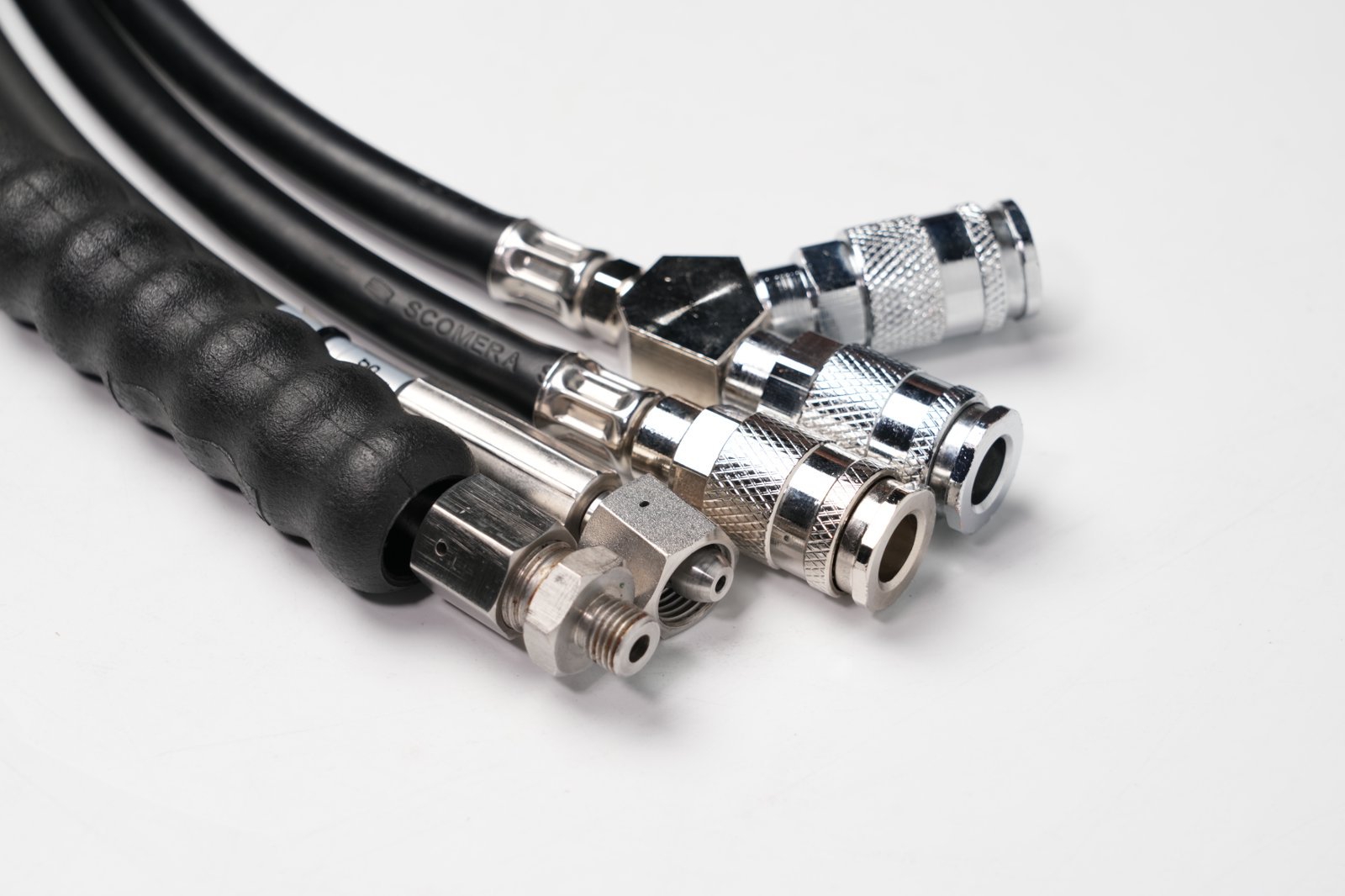
Many procurement teams focus heavily on the hose material while completely ignoring the end fittings. This oversight remains the most common cause of system failure and OSHA citations. Connections act as the critical juncture point for your entire Breathing Air Supply Hose network.
We must reiterate a critical regulatory reality: mixing brands of fittings and hoses instantly voids all respiratory approvals. You cannot connect a brand-A airline to a brand-B respirator hood. Even if the couplers snap together perfectly, the combination lacks NIOSH testing data. You must utilize the exact OEM fittings specified in the manufacturer's user manual.
Manufacturers utilize specific connection profiles to prevent accidental cross-contamination. Common profiles include:
Schrader: Features a distinct twist-lock mechanism to prevent accidental disconnection.
Hansen: A very common quick-disconnect style, but available in specific breathing-air profiles to prevent connection to dangerous nitrogen or shop air lines.
Snap-Tite: Often used in heavy-duty environments requiring rapid deployment.
OBAC: Specialized fittings frequently seen in European-designed respiratory systems.
You must carefully audit your existing plant infrastructure. Trace your current manifolds and filtration panels. Ensure the new airline connections will integrate seamlessly into these existing ports. Never resort to dangerous "workaround" adapters sourced from local hardware stores. Modifying a connection point introduces fatal weak links into your life-support system.
Different industries present wildly different environmental hazards. Industry forums constantly highlight the pain points of using the wrong equipment for a specific job. Customizing your Breathing Air Hose selection based on the daily task resolves these chronic issues.
Spray booth operators battle fatigue and static electricity constantly. Dragging a heavy, rigid airline across a freshly painted car hood ruins the finish and exhausts the painter. These environments prioritize extreme flexibility and lightweight design. Furthermore, airborne dust and atomized paint create combustible atmospheres. Anti-static properties built into the airline jacket prevent spark generation. You must balance this lightweight design against the need for strict solvent resistance.
Metal fabrication shops present an aggressive, destructive environment. Welders deal with flying sparks, molten metal slag, and sharp steel edges. A lightweight PVC line will melt or puncture within hours. These applications require thick, slag-resistant outer jackets. You must prioritize spark resistance and heavy crush-proof profiles. The added weight is an acceptable trade-off to ensure the airline survives grinding wheels and falling metal debris.
Rescue teams entering tanks, silos, or municipal sewers face complex entry geometries. Navigation involves tight corners, sharp grating, and absolute darkness. In these scenarios, kink resistance becomes the most critical feature. If the airline bends sharply around a pipe and kinks, the rescuer loses their air supply. Rescue equipment also requires bright, high-visibility coloring (often neon yellow or green). Rescue commanders rely on continuous long-length integrity to track their team's location in pitch-black environments.
Many buyers search for the cheapest available options online. This approach frequently backfires, leading to premature equipment failure and repeated purchases. Understanding the true lifespan of these components changes how you evaluate your options.
Cheaper options often utilize inferior rubber blends. These materials degrade rapidly under UV light or industrial chemical exposure. Lower-tier airlines often require frequent replacement due to severe kinking, outer jacket cracking, or rapid fitting wear. The couplers begin leaking air prematurely. Investing in high-grade OEM materials extends the lifecycle of the equipment dramatically. A ruggedized jacket withstands warehouse traffic better, reducing the frequency of emergency replacements and operational downtime.
Maintaining the system requires strict daily protocols. You must store the equipment properly to prevent internal contamination. Leaving the line unsealed on a dusty shop floor invites particulate matter inside. When the next user connects the system, they instantly inhale that accumulated debris. Always cap the ends when not in active use. Clean the outer jackets using mild, manufacturer-approved detergents. Never soak the couplers in harsh industrial solvents, as this degrades the internal O-rings.
Before placing a purchase order, follow this concise action checklist to guarantee compatibility:
Identify the existing respirator brand: Document the exact make and model of the worker's hood or facepiece.
Confirm the air source pressure: Verify whether you run an ambient pump (low pressure) or a traditional compressor (high pressure).
Map the environmental hazards: Walk the job site and note extreme temperatures, heavy vehicle traffic, or chemical exposures.
Select the corresponding OEM component: Choose the exact manufacturer-approved length and material profile that matches steps 1 through 3.
Selecting the right airline fundamentally requires matching OEM specifications directly with your specific environmental demands. You cannot treat this life-support equipment as a simple hardware store purchase. Understanding the critical differences between low-pressure ambient systems and high-pressure compressor requirements ensures adequate airflow. Recognizing environmental threats—ranging from chemical solvents to heavy vehicle traffic—dictates the necessary jacket materials. Ultimately, adhering to strict NIOSH compatibility rules protects your workforce from catastrophic system failures.
Do not compromise on respiratory safety. We highly encourage readers to consult with certified safety specialists before altering their current setup. Review your facility's existing air compressor specifications, trace your manifold connections, and audit your current respirator models before finalizing any new equipment purchase.
A: Emphatically no. Standard pneumatic lines contain industrial plasticizers and manufacturing residues. When used for breathing, they release toxic volatile organic compounds (VOCs) directly into your lungs. Using them causes severe OSHA and NIOSH violations, and puts operators at extreme risk of poisoning or asphyxiation.
A: The limit is generally 300 feet. However, this depends strictly on the specific manufacturer's NIOSH approval testing. You must check the manual to ensure your air source possesses the capacity to maintain minimum CFM across that exact distance.
A: No. Cross-mixing components from different manufacturers instantly voids the NIOSH certification of the entire system. You must use the exact brand and model of airline specified by your respirator manufacturer.
A: There is no strict calendar timeline for replacement. You must rely on daily visual inspections. Check for deep cracks, flattened sections, severe kinks, and fitting wear. If the jacket is compromised or the couplers leak, replace it immediately.