Views: 142 Author: Site Editor Publish Time: 2026-09-10 Origin: Site
A ruptured line on an active job site causes instant machinery failure. It halts your entire operation immediately. You suddenly face costly environmental cleanup liabilities. Operators also encounter severe safety hazards. High-velocity fluid injection injuries can be fatal. Simply grabbing a generic replacement part is never a viable solution. You must actively engineer a highly reliable connection. Your new assembly needs to match exact OEM specifications. It must survive harsh, high-abrasion construction environments. The system must sustain complete integrity during sudden peak loads. This comprehensive guide provides an evidence-based evaluation framework. We will show you how to properly assess heavy machinery requirements. You will discover practical methods for selecting optimal components. We share field-tested strategies to ensure long-term operational safety. You will finally understand the exact metrics required for maximum uptime.
Accurate hydraulic hose selection relies on the STAMPED framework to ensure no operational variable is overlooked.
System pressure dictates construction; standard applications may use a 2SN hydraulic hose, while extreme dynamic loads require multi-spiral designs.
Never mix and match hose brands with incompatible fittings—doing so voids warranties and introduces critical failure risks.
Reverse-engineering an existing hose requires correctly reading the layline data, focusing on dash sizes and EN/SAE standards.
You must establish the industry-standard STAMPED methodology. It serves as your baseline. You will use it to evaluate any replacement. It also guides new installations perfectly. Accurate hydraulic hose selection depends entirely on this simple acronym. It prevents catastrophic oversight during maintenance.
Size: Engineers measure internal diameter using a dash size system. The internal diameter must maintain proper fluid velocity. The outer diameter must fit your existing routing clamps perfectly.
Temperature: You must evaluate two distinct thermal metrics. Ambient temperature refers to job site weather. Fluid temperature indicates internal system heat.
Application: Construction environments demand extreme durability. You often need abrasion-resistant outer covers like UHMWPE.
Material: The synthetic rubber inner tube must be compatible. It needs to handle specific fluids without degrading.
Pressure: The assembly must handle maximum system spikes safely.
Ends: Couplings dictate the final mechanical seal integrity.
Delivery: You must account for fluid volume requirements.
Every single variable matters equally. Missing one step leads to premature failure. We recommend documenting each parameter before contacting suppliers. This proactive approach saves thousands in downtime. It guarantees your new assembly operates safely.
You must understand the strict difference between operating and burst pressure. Operating pressure defines normal daily workload levels. Burst pressure indicates catastrophic failure limits. The industry enforces a strict 4:1 safety factor. A hose rated for 4,000 PSI operating pressure must survive 16,000 PSI before bursting. You cannot ignore this critical safety margin.
Construction equipment experiences violent operational realities. Machines generate massive pressure surges constantly. Relief valves do not always catch instantaneous spikes. Your chosen high pressure hydraulic hose must exceed maximum system settings. We see many failures from unexpected hydraulic shocks. Dropping heavy loads creates massive fluid blowback.
Return lines present an entirely different structural challenge. They manage fluid traveling back to the reservoir. These lines handle vacuum and suction forces. They require distinct internal wire reinforcement. This specialized structure prevents total tube collapse. You treat delivery lines and return lines differently. Each serves a unique mechanical purpose.
Buyers must categorize needs based on physical reinforcement construction. The internal metal structure dictates flexibility and strength. Wire braid designs handle most standard heavy equipment tasks. Multi-spiral designs tackle extreme industrial applications.
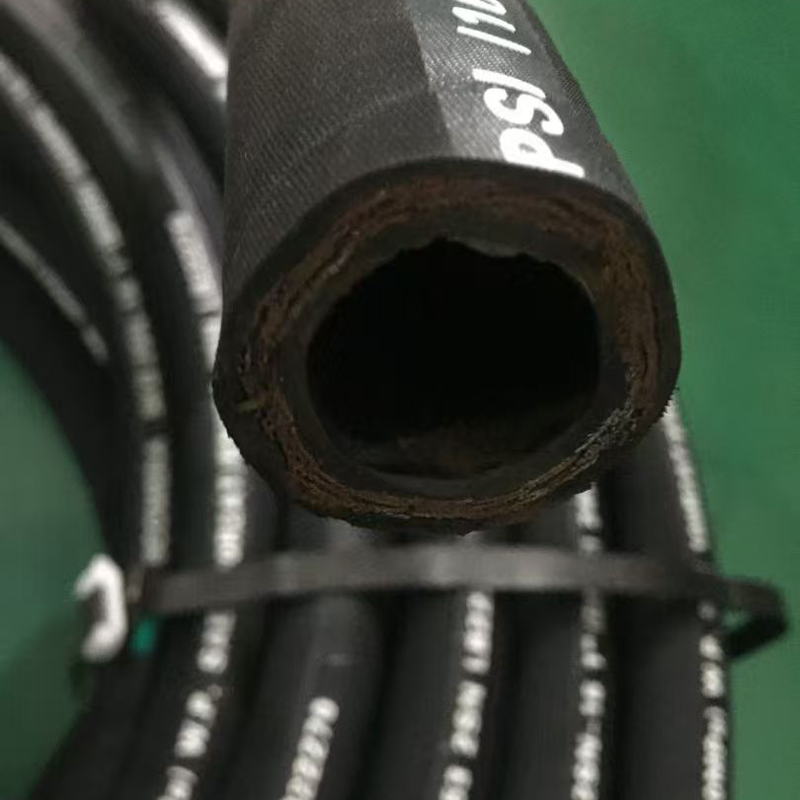
Standard wire braid options include 1SN and 2SN configurations. A standard 2SN hydraulic hose features two layers of high-tensile steel wire. You will find it ideal for medium-to-high pressure applications. It offers excellent flexibility and tight bend radii. Mechanics use them frequently for skid steer attachments.
Heavy construction equipment often demands spiral reinforcement. These feature four to six layers of spiraled steel. Braided designs cross over one another. Spiral layers lay parallel to prevent friction. This design handles extreme pulsating high pressures beautifully. It eliminates early metal fatigue under constant shock. You lose some flexibility but gain immense durability.
Structure Type | Reinforcement Layout | Primary Benefit | Ideal Construction Use Case |
|---|---|---|---|
1SN (Single Braid) | One crossed wire layer | Maximum flexibility | Low-pressure return lines |
2SN (Double Braid) | Two crossed wire layers | Balanced strength | Skid steer auxiliary attachments |
4-Wire Spiral | Four parallel wire layers | High impulse resistance | Main boom cylinders |
6-Wire Spiral | Six parallel wire layers | Extreme burst rating | Heavy hydrostatic drives |
Routing presents a massive dilemma for heavy machinery. You face specific challenges along the boom and stick. Engineers must balance absolute flexibility against required reinforcement. A rigid line will not articulate properly. A weak line will burst under digging forces. Finding this exact balance requires careful specification.
Your excavator hydraulic hose faces brutal environmental threats. Dirt, rock debris, and structural rubbing destroy standard rubber. You must mandate protective outer sleeves. Nylon blast sleeves offer excellent abrasion resistance. Steel spring guards protect high-friction bend zones. They prevent external damage before it reaches the reinforcement.
Dynamic load factors affect longevity daily. Constant articulation creates structural fatigue over time. Machine vibration slowly weakens metal fitting connections. You must enforce optimal installation practices always. Mechanics must avoid twisting or torqueing the assembly. A five-degree twist reduces lifespan by seventy percent. Proper linear alignment remains absolutely critical.
Most buyers only shop after blowing a line. We understand this reverse-engineering reality completely. You must read the printed layline accurately. This continuous text string runs along the outer jacket. It contains the exact engineering DNA of the component. You can replace parts safely once you decode it.
Locate the Standard Code: Find the SAE (Society of Automotive Engineers) or EN (European Norm) prefix. This identifies the overarching manufacturing standard.
Identify the Dash Size: Look for a number like -08 or -12. This indicates the internal diameter in sixteenths of an inch.
Verify the Pressure Rating: Spot the maximum working pressure printed clearly. It usually lists both PSI and Bar measurements.
Check the Date Code: Find the manufacturing quarter and year. This helps you track total service life accurately.
Sometimes the jacket wears down completely. You cannot read the layline on a damaged hydraulic hose. We recommend a practical troubleshooting step. Use digital calipers to measure the metal fittings. Measure the cleanly cut end of the tube. You can also consult the heavy equipment parts manual.
Many operators fall for the mix-and-match fallacy. They assume any fitting works seamlessly. This dangerous assumption causes massive workplace accidents. Manufacturers design hoses and couplings as a matched system. Mixing brands voids all manufacturer warranties immediately. It introduces critical failure risks under heavy pressure.
You must understand basic thread types thoroughly. Common construction fittings include JIC and ORFS styles. Many large machines utilize Code 61 or Code 62 flanges. You must verify thread pitch meticulously. You must also confirm seat angles match perfectly. A slight mismatch creates an invisible, deadly leak path.
We advise buyers to shortlist vendors strictly. You should only source from certified fluid power distributors. They utilize correct, manufacturer-approved crimping specifications. They offer total traceability for their custom assemblies. A certified supplier guarantees your component passes safety tests. They provide immense peace of mind for operators.
Proper specification serves as a massive investment in safety. It maximizes your daily operational uptime effortlessly. It is never an area for cheap cost-cutting. Using the correct parameters prevents catastrophic equipment failure. Your machinery relies on precision engineering to function.
You should document your required STAMPED criteria today. Photograph your existing laylines before they wear away. Document your metal fittings clearly from multiple angles. Consult a certified fluid power specialist immediately. They will provide a final, accurate quote based on facts. You will secure a safer, more reliable job site.
A: Yes, you can technically use a higher pressure rating. However, it often compromises necessary flexibility. It also increases your replacement costs unnecessarily. Heavy spiral wires make routing much more difficult. You should never use a lower pressure rating.
A: We cannot guarantee an exact timeframe. Lifespan depends entirely on operating hours and UV exposure. Extreme abrasion also accelerates external wear rapidly. We strongly recommend conducting visual inspections every 100 hours. Replace them immediately if wires become visible.
A: The distinction relates primarily to testing standards. They also possess slight dimensional tolerance differences. European EN standards often require tighter jacket tolerances. However, manufacturers generally build them to overlap. Mechanics frequently use these two specific standards interchangeably.